17–0M
deaths between 1918 and 1920
Even peace couldn't stop the dying.
PUBLIC NOTICE · REF. EX-1918/60
Preventive measures recommended by the public health authorities.
This warning has already been issued once.
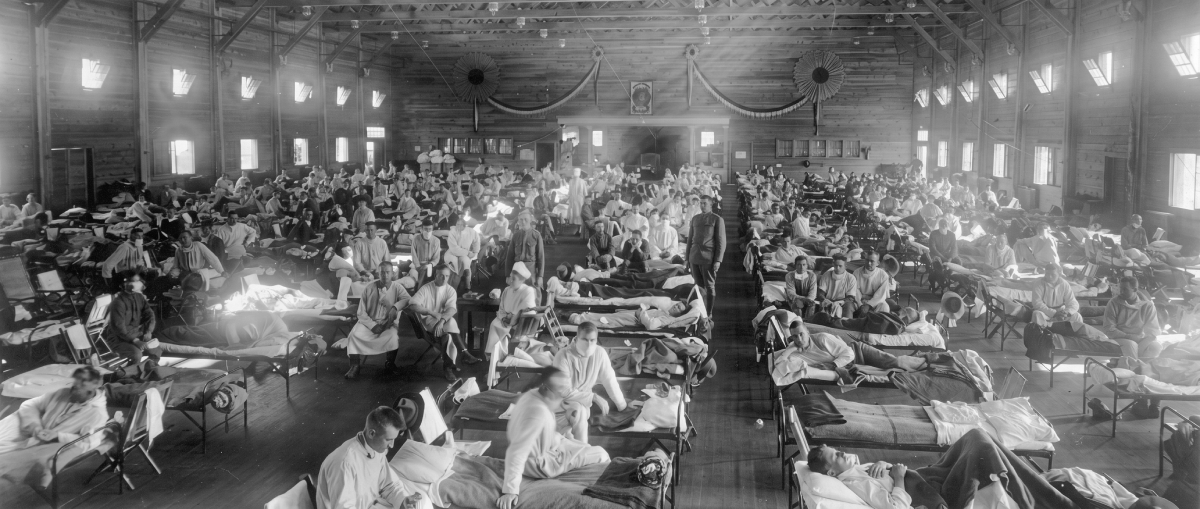
They called it the «Spanish flu», but it wasn't born in Spain and it didn't look like any flu. In two years, it killed more people than the First World War. It was the greatest health catastrophe in modern history, yet the world chose to silence it.
It happened before. It won't be the last.
THE 1918 PANDEMIC · TRUE FACTS
17–0M
deaths between 1918 and 1920
Even peace couldn't stop the dying.
0M
people infected
One in every three people on Earth caught the virus.
0sem.
to kill more people than AIDS did in 24 years
According to historian John M. Barry.
20–40
the age of many victims
Unlike most flu outbreaks, it struck healthy young adults in the prime of life.
−0years
life expectancy in the U.S. in 1918
The largest single-year drop ever recorded.
0
deaths in Philadelphia in six weeks
After a parade attended by 200,000 people went ahead despite the outbreak.
THE RHYTHM OF 1918
For two years, the pandemic claimed one life every 1.26 seconds..
0
people would have died since you opened this page.
Their names were Thomas. Alfie. Nora. They were nineteen, had plans for Sunday, and someone waiting for them at home.
The counter won't stop. Neither should our memory.
SILENCE WAS AN ORDER
Click each line to uncover the truth.
THE MASS GRAVES
In 1918 the graveyards ran out of room. Thousands of people were buried at night, in haste, in open trenches. Many were children. Almost all of them were young. The earth took their names forever.
This flame burns for every one of them, and speaks their names, one by one.

Read them slowly. For many, it is the only funeral they will ever have.
WHARRAM, YORKSHIRE · SEPTEMBER 1918
«The newspapers say the war is coming to an end. They're wrong. The illness I saw born in France has followed me home, and now I can feel it inside my own chest.
I know how this ends, but I refuse to become just another body beneath a sheet. Before the fire consumes everything, I will fill these pages with the truth about Camp 60».
— EMILY PORTER'S JOURNAL · 1918
She became one of those numbers above. This is her story.

THE NOVEL
by Víctor Baldoví · Currently available in Spanish
Emily Porter is twenty-seven years old, a British volunteer nurse, and the keeper of a forbidden journal. In 1916, while serving at a field hospital on the Western Front, she witnesses the birth of a mysterious disease no doctor can explain. By 1918, that disease has a name. It has become a global plague... and it has reached her doorstep in Yorkshire.
As the epidemic closes in, Emily races against time —and against her own failing body— to reveal the truth about Camp 60. Beside her stands David, a survivor of the trenches haunted by scars no one can see. A love story against impossible odds. A novel about the truths history buried... and about refusing to let anyone die alone.
«Write "pneumonia" on the report. There is no box for this.».— Emily Porter
FREE · THE GAME
Before you read Emily's story, survive one night at Camp 60. November, 1916. Six stretches. A half-empty medical kit. And Emily Porter beside you, recognizing what no one else can see. Every decision can save a life or end one. The ending... is the reason this website exists.
About 10 minutes · Play in your browser · No download required · Warning: it stays with you.

ONE LAST GESTURE
During the 1918 pandemic, some towns forbade church bells from ringing for the dead. Mourning was considered dangerous for morale. Thousands left this world in silence. This bell arrives more than a century late... but it can still be heard. No one should leave this world without someone saying goodbye.
0 bells rung from this browser for those who never heard one.
Silence was an order. Breaking it is now up to you.
You restored someone's dignity.
I do not fear death.
I fear the day when no one remembers our names.
Because a person dies twice.
The first time... when they stop breathing.
The second... when they are forgotten.
— Emily Porter. April 1917.